Word of God: Jn 15: 1–5
“I am the true vine, and my Father is the gardener. He cuts off every branch in me that bears no fruit, while every branch that does bear fruit he prunes so that it will be even more fruitful. You are already clean because of the word I have spoken to you. Remain in me, as I also remain in you. No branch can bear fruit by itself; it must remain in the vine. Neither can you bear fruit unless you remain in me. “I am the vine; you are the branches. If you remain in me and I in you, you will bear much fruit; apart from me you can do nothing.”
Insight from the Founders
From its earliest days, Spiritan spirituality has been rooted in a dual and inseparable movement: prayer that shapes the heart and humble service to the least among us. These two dimensions are never in tension; they illuminate one another and reveal how the Spirit guides the missionary.
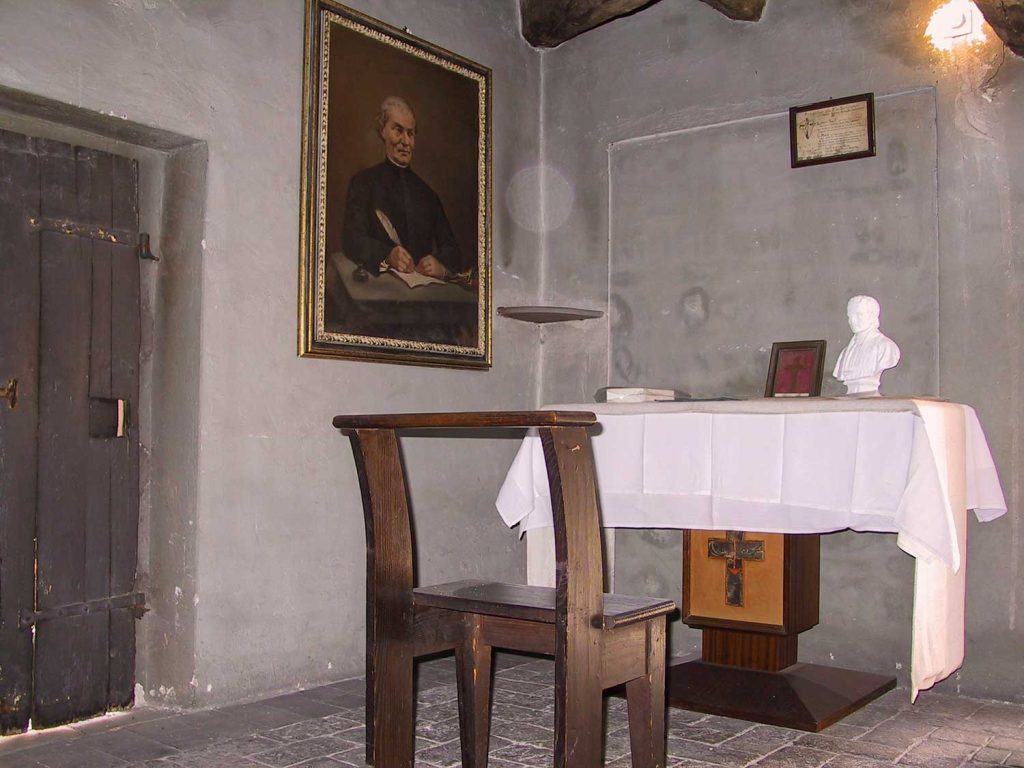
For Poullart des Places, everything begins in prayer. His retreats open him to God’s mercy and reveal his own fragility. Prayer becomes for him a source of light and discernment: it is there that he understands the call to share the life of poor students. By leaving his comfort to live among them, he performs a founding act: service is not merely doing things for others, but being with them. In this closeness, he gives himself entirely to God for the service of the poor—especially the “poor students”—and discovers that prayer and service mutually illuminate and strengthen one another.
Libermann deepens this insight by affirming that the Spiritan life is, above all, a life of prayer. God speaks to the heart: there the Spirit purifies, enlightens, and guides. Even when burdened with heavy responsibilities, Libermann insists on the necessity of inner silence, without which mission loses its source. From this experience arises practical union: remaining in God at the heart of action, allowing the Spirit to inspire decisions, words, and gestures.
This life of prayer naturally leads to concrete service. For Libermann, service is neither an abstract ideal nor spiritual rhetoric: it is a humble, daily, incarnate commitment. To the missionaries in Dakar and Gabon, he recommends radical closeness: to be with the people “like servants to their masters” (ND IX, 330). This powerful expression captures his vision of mission: total availability, active humility, unconditional service. The Rule of 1849 expresses it with striking clarity: “We regard ourselves as their servants; we shall devote our whole lives to them” (ND X, 515).
Reflection
Spiritan spirituality rests on a fundamental conviction: mission is born in prayer and fulfilled in service. These two dimensions respond to one another: prayer shapes the missionary’s heart, and service reveals the truth of that prayer.
In prayer, the Spiritan stands before God in simplicity. He allows the Spirit to touch his frailties, purify his intentions, and guide his desires. This daily return to the heart becomes a place of inner unification: there God works patiently, frees what hinders, and opens space for a renewed “Here I am.” Without this source, action becomes scattered and eventually runs dry.
But Spiritan prayer does not enclose; it sends forth. It gives a vision capable of discerning God’s presence in events, faces, and forms of poverty. It shapes a way of being that is gentler, more patient, more fraternal. It is within this movement that practical union is found: a way of remaining in God at the heart of action. It is not a technique but an inner attitude: when the heart stays open, the Spirit inspires the missionary’s actions, words, and reactions, gradually shaping within him the very manner of Jesus.
In this dynamic, service becomes a way of life: closeness to the little ones, respect for cultures, commitment to justice, peace, and the care of creation. The missionary becomes a person of solidarity, a defender of the weak, a witness to the compassion of Christ. Yet none of this is possible by our own strength: it is prayer that gives us the capacity to love with patience and to serve with gentleness. Without prayer, service becomes fragile activism; with prayer, it becomes a sharing in the way Christ made himself a servant.
Thus, prayer opens us to service, and service leads us back to prayer. It is within this inner unity that the Spiritan life unfolds.
Questions for reflection
- To what extent does daily prayer truly nourish my choices, my attitudes and my way of being a missionary? How does it become for me a place where God speaks and guides my life?
- What resistances or habits still prevent me from living the unity between prayer and mission? What concrete steps can I take to allow the Spirit to further unify my Spiritan life?
Prayer
Lord, open our hearts to your presence.
Teach us to listen to your Spirit in the depths of our being, where you speak, where you guide, where you silently shape our lives.
May prayer root us deeply in you.
Teach us to love our brothers and sisters with patience,
to serve them with humility, in the simple and radiant joy of your Gospel.
Open our hearts to compassion and make our service fruitful.
May every gesture, every word, every encounter make your gentleness and compassion visible.
May everything within us reflect your presence through the power of your Spirit. Amen.






This article is also available in: