Presentation of the logo
The logo for the Congregation’s animation plan for the next six years (2022-2028) was created by Fr. Damasceno dos Reis (Portugal).
This logo reveals its meanings little by little, with three symbols and three colours for each period of animation. Each symbol has its own meaning revealed in a dynamic of deepening or widening in the succeeding phases.
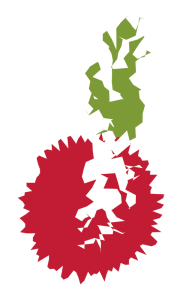
From the initial blurred representation (phase 0), meaning gradually emerges:
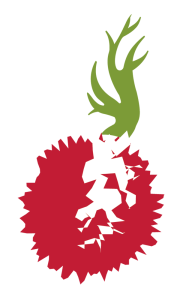
- first a tree to signify the visibility of our mission, the evangelization of the poor (phase 1),
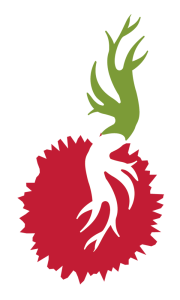
- then the necessary rooting of this in Christ through a deep spiritual life (Spiritan spirituality, phase 2),
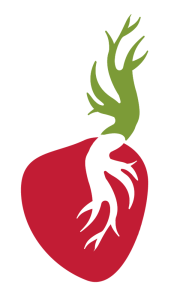
- finally a heart takes shape signifying our intercultural community life (phase 3), a reminder of the call to a unity in diversity, always fruitful and a sign of hope within the human communities where we live.
Let us now take up each symbol for itself.
Spiritan Mission
Phase 1: 2022-24
The tree:
This symbol reminds us of the tree of life (the Easter cross), the mission of the Son.
It understands mission as collaboration in the work of God – God’s creation and redemption. The tree is a symbol of the cross and of all beauty in the world created by God.
It is also a symbol of the Spiritan commitment to justice, peace and the integrity of creation (JPIC).
The tree has its branches raised, resembling hands turned toward heaven in thanksgiving: as creation praises the Lord, so do Spiritans with the poor and with the Virgin Mary as in the Magnificat.
In this first phase, the tree, as a symbol of the cross, is the only well-defined element. The green tree has no roots. It is therefore transplanted. It has grown elsewhere and is planted in a new land, like the Gospel carried by the missionaries, believers rooted in their faith, in their parish, in their community, with the mandate to proclaim the Gospel throughout the world. This is the Spiritan Mission.
Under the green tree, there is red, still blurred. It may be the red of blood; the blood of childbirth which reminds us of our entering into life. Blood is an element that nourishes the life of the body. The blood given is that which nourishes and saves us. But blood is also shed, acknowledging violence and war in the world in which we live. It is the blood spilled by criminals and given by martyrs. In the midst of this blood there is a flash: an opening, a light. But nothing is yet distinct. This world is still in chaos. The Gospel of love is not yet rooted in it, even if the white opening reflects the desire for hope. The Spiritan mission today requires us to go to the peripheries to encounter the marginalized of today’s world to proclaim the Gospel of love.
Spiritan Spirituality
Phase 2: 2024-26
The Roots:
The white roots represent the immersion in the purity of the origins, the return to the crystalline source. The roots plunge into the depths of the earth to extract the nutrients essential for life.
Spiritual depth is likewise a fundamental condition for Spiritans to accomplish the mission to which the Lord calls us in fidelity to the charism of our founders. Only a life rooted in Christ can endure and bear fruit.
The tree has now planted its roots. They are a mirror image of the shape of the tree. The world is still in chaos. The stranger, the excluded, the different, are still frightening. The powerful protect themselves with violence, but Christ’s message of love has taken root. Hope has taken the form of the tree, of the cross, which has overcome evil and suffering. This is the time of growth.
Our Spiritan roots, the essence of which is not very visible, guides us along the paths of participation in the work of God, who makes grow what we sow.
Intercultural Community living
Phase 3: 2026-28
The Heart:
What better way to express the “Cor Unum” of the Spiritan motto? This unique heart is obtained from a shapeless spot (symbol of diversity, but also of potential tensions) seen in the logos of the previous phases.
It is within the intercultural communities where we live that the experience of our spirituality takes root on a daily basis. It is in the loving heart of our Spiritan brothers and sisters gathered around the Eucharistic table, the pierced heart of Jesus, that the missionary finds the energy for the mission to which we have been called.
The world is no longer chaotic. It has taken on the shape of a heart, because after taking root in it, love has transformed it. It is the new Jerusalem towards which all peoples are converging: a place of peace, where all live together in harmony and respect (Isaiah, Apocalypse): “behold, I am doing something new”.
As part of a globalized planet, the cohabitation of cultures and peoples is the great challenge, with the fears and risks that this generates.
Intercultural community living is a sign, a witness of the reign of God in our midst. It reveals what love produces in a human community. In this line, intercultural life in our communities is a prophetic sign. It shows the world that it is possible to live together beyond differences. Moreover, it manifests the richness of the encounter and the contribution of each culture and each people to the beauty of the world.
During the long preparation of the Bagamoyo II Chapter, we prayed with these words: “May we, in the joy and richness of our diversity, strive to live, within our Spiritan family, a deeper communion of life and mission.”
May our living together illuminated by the Gospel and our Spiritan patrimony help to build bridges between peoples who ignore, divide or fight each other.
This article is also available in:
Français Português