

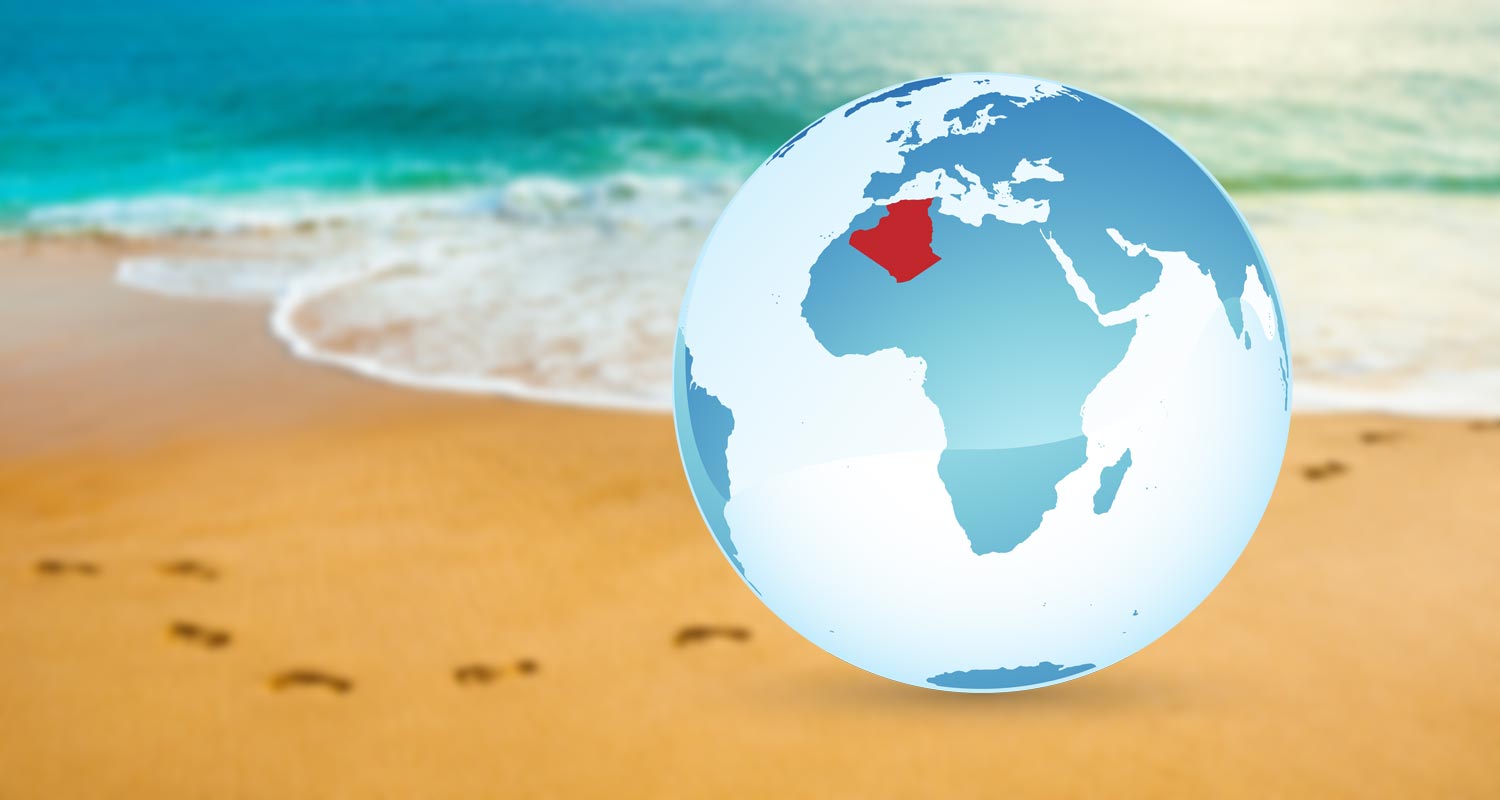
A momentous occasion for the country and for the Church
About a year ago, when Cardinal Robert Francis Prévot, an Augustinian, was elected Pope under the name Leo XIV, Algeria immediately referred to him as a “child of Saint Augustine” and, in a certain sense, almost as a child of Algeria. This is because the new Pope, as an Augustinian and former Prior General of the Order (2001–2013), had already visited his Confreres and Sisters in Algeria on several occasions.
From the beginning of his pontificate, Pope Leo XIV described himself as a “son of Saint Augustine” and expressed a desire to visit Algeria. He had already been there in 2001 as a speaker at an international symposium held in Algiers and Hippo at the initiative of President Bouteflika, and again in 2013–14 as Superior General of the Augustinians. His return in April 2026, this time as Pope (the Holy See), came at the invitation of the President of the Algerian Republic.
Naturally, the Diocese of Constantine (which includes Annaba, the city of Saint Augustine), together with the Augustinian Sisters and Brothers, celebrated his election with great joy.
The Augustinian Sisters, based mainly in Algiers, have long served in a working‑class neighbourhood as nurses, librarians, and coordinators of women’s activities, remaining faithful even after the tragic loss of two sisters during the years of terrorism. The Augustinian Fathers are responsible for the majestic, recently restored Basilica of Saint Augustine, which stands on a hill overlooking the ruins of the ancient basilica. Their ministry of hospitality welcomes a wide variety of visitors: Christians living in Algeria, Algerian emigrants returning home, local travelers, and tourists from across the country. This ministry echoes the presence of our own confrere, Raymond Gonnet, who for nearly two years has been serving in Beni Abbès in southern Algeria, a place marked by the witness of Charles de Foucauld.
At the national level, the visit of Pope Leo XIV on 13–14 April 2026 was remarkably well prepared, well organised, and widely covered by newspapers, radio, television, and digital media—all in a very positive light. The Pope, a North American with a rich cultural and apostolic background and fluent in English (a language increasingly promoted in Algeria), was warmly received.
For the Algerian people, the visit was a source of great pride. It allowed them to express their renowned tradition of hospitality; it offered the world an image of a new Algeria, distinct from the painful memories of terrorism; and it provided an opportunity to recall a significant period of pre‑Islamic Algerian history—culturally, economically, and religiously influential, especially in its Christian heritage, with Saint Augustine at its centre.
The memory of the martyrs was present, but without overshadowing the atmosphere of peace and hope that characterizes the country today.
On the first day, in Algiers, the Pope visited the Martyrs’ Memorial, honouring the nation’s wounded memory—a gesture deeply appreciated. His pastoral visit to the Great Mosque of Algiers highlighted the importance of peaceful coexistence among believers of different faiths. In his address to the authorities, he encouraged leaders to continue serving the people and to welcome the contribution of young generations to a country already moving in a positive direction. At the Basilica of Our Lady of Africa, several well‑organized encounters took place.
These positive aspects do not hide the challenges that remain: difficulties in obtaining visas, occasional discriminatory attitudes, the harsh living conditions of the poorest, the precarious situation of migrants, and the vulnerability of those whose life choices differ from the majority.
We hope that the significant moments of this visit, together with the Pope’s messages, may strengthen the Church in Algeria and gradually reach all hearts, supporting the country on its path toward greater well‑being for all.
The second day of the visit took place in Annaba–Hippo, the city of Saint Augustine. The Pope visited his Augustinian confreres and then the Little Sisters of the Poor, who care for elderly people in need. This was followed by the celebration of Mass—simple and reserved—during which the Pope offered these words:
“On this earth, dear Christians of Algeria, remain a humble and faithful sign of Christ’s love. Bear witness to the Gospel through simple gestures, authentic relationships, and daily dialogue. In this way, you will bring flavour and light to the places where you live. (…) Your history is one of generous hospitality and perseverance in the face of trial: here the martyrs prayed; here Saint Augustine loved his flock, seeking the truth with passion and serving Christ with ardent faith. Be heirs of this tradition, bearing witness in fraternal charity to the freedom of those born from above, as a hope of salvation for the world.”
At a time when we hope to strengthen our Spiritan presence in Algeria, this visit encourages us in our apostolic mission, especially in the daily work of dialogue with Muslims.
This article is also available in: