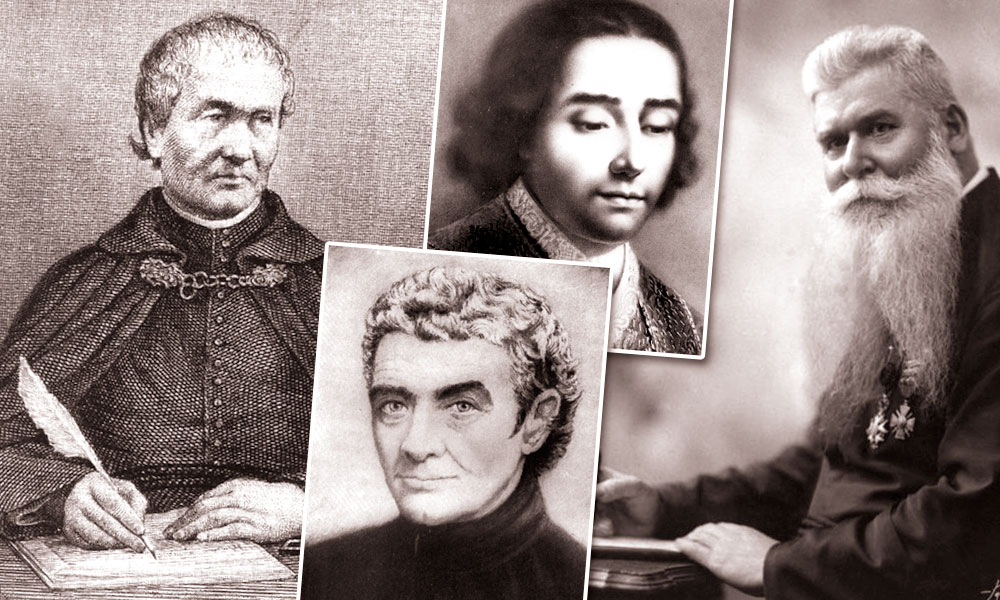
The lives of our Spiritan predecessors remain a model for us: they persistently show us where to direct our gaze—toward Christ. Their lives, offered in total self‑giving, continue to challenge us even today, inviting us in turn to offer our own lives freely in the service of Christ’s Mission.
Let us therefore continue, with confidence and perseverance, praying that God our Father may grant our departed confrères who served Him so selflessly and faithfully the grace of canonization. And may the Church, through their intercession, continue to grow and bear witness to the Gospel with a more vibrant faith, a firmer hope, and an ever more ardent charity.
Path to canonization
Canonization is only the final step of a ladder that presupposes several others: for a candidate to officially become a saint, he must first be a Servant of God, then Venerable, then Blessed. The starting point for introducing a Cause is the reputation for holiness of a person—that is, the common opinion of people that his or her life was upright and rich in Christian virtues. This reputation must endure and grow. Those who knew the person speak of the exemplary nature of his life, of his positive influence, of his apostolic fruitfulness, and of his edifying death.
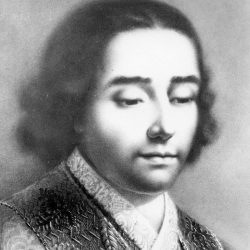
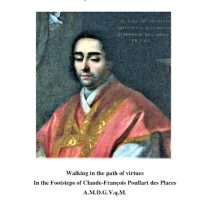
The Servant of God Father Claude François Poullart des Places
In the Church, the title Servant of God is given to any Catholic faithful whose cause for beatification and canonization has been officially opened. This is the case for Father Claude François Poullart des Places.
The diocesan inquiry in Paris was concluded in 2008 and led to the recognition of the virtues of the Servant of God. The Cause was then transmitted to Rome. In June 2023, the Positio -the comprehensive dossier that presents all the evidence about his holiness – was presented to the Dicastery for the Causes of Saints.
In August 2023, the Dicastery’s Historical Commission studied the Positio and communicated the results of its analysis. Then, in October 2023, it issued several recommendations, requesting certain clarifications and details to be added to the dossier.
Since then, we have been working to integrate these observations: corrections, additions, and verifications. Extensive research has been carried out in the archives of the Congregation, in those of the Jesuits in Rome, of Propaganda Fide, of the Montfortians, as well as in the Paris archives, in order to respond accurately to the requests of the Historical Commission.
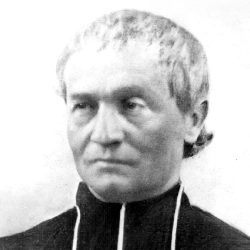
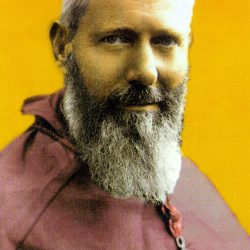
Venerable Father François Marie Paul Libermann
Before being proclaimed a saint, a faithful Catholic is first recognized as a Servant of God, then as Venerable, and finally as Blessed. On June 1, 1876, Pope Pius IX signed the decree introducing the cause of beatification of Father François Libermann. By this act, the Church officially recognized his heroic virtues and bestowed upon him the title of Venerable.
Since then, many favours have been attributed to his intercession. However, no healing has yet been accepted as a miracle, a necessary condition for him to be proclaimed Blessed.
This is why it falls to all Spiritans to continue praying fervently, to invoke him and encourage others to invoke him, in order to obtain from the Lord—through the Holy Spirit and through the Immaculate Heart of Mary—the graces that humanity so greatly needs. Only one miracle is lacking for Libermann to pass from Venerable to Blessed, to become better known, and to be invoked even more throughout the Church.
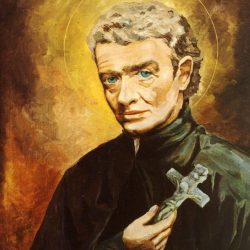
The Blessed Father Daniel Brottier
Beatification is the intermediate step on the path toward canonization. When a faithful Catholic is recognized as a martyr, he may be declared Blessed without a miracle being required. In other cases, the Church asks that a miracle attributed to his intercession be authenticated. This miracle is most often a healing that science cannot explain. A medical commission—convened by the Dicastery for the Causes of Saints and composed of specialists, whether believers or not—then examines the case with great care. To be recognized, the miracle must involve a healing that is complete, lasting, and, in many instances, rapid.
Regarding the Blessed Father Daniel Brottier, a diocesan inquiry is nearing completion in the Diocese of Luçon, in France. The information gathered suggests the intervention of the Blessed, but the healing under examination has not been accepted as miraculous according to the required criteria.
It is also important to note that the reputation for holiness of the Blessed Father Daniel Brottier continues to grow, particularly in Argentina, where his spiritual figure is touching an increasing number of faithful.
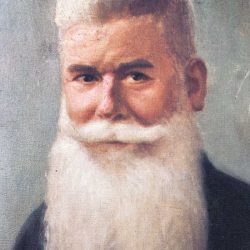
The Blessed Father Jacques Désiré Laval
The cause for beatification and canonization concerns a Catholic faithful who, during his life, at the time of death, and after death, has enjoyed a reputation for holiness, martyrdom, or the offering of his life. For a cause to be opened, the person must therefore possess a genuine reputation for holiness: public opinion recognizes that his life was upright, exemplary, and marked by Christian virtues. This reputation must not only endure but often grow. Those who knew the person bear witness to the exemplary nature of his life, his spiritual influence, his apostolic fruitfulness, and sometimes the edifying manner in which he died.
Regarding the Blessed Father Jacques Désiré Laval, a “miraculous” healing of a child who had suffered a severe head injury had been considered, but various medical opinions are being consulted, each now claiming that there are scientific explanations to the healing. Therefore it cannot be accepted as a miracle. Note that for a healing to be considered a miraculous healing or a miracle, there must be no scientific explanations to the healing. We thus keep looking for claims of miraculous healing and shall proceed to assess healings to see if there could be other miraculous healings we could attribute to prayers through the intercession of Blessed Father Laval.
The Servant of God Monsignor Joseph Shanahan
When a cause of beatification is opened, a specially appointed postulator gathers the documents and testimonies needed to reconstruct the life and holiness of the candidate. The first phase officially begins in the diocese: at this point, the faithful person is recognized as a Servant of God.
This stage aims primarily at verifying the heroicity of virtues—that is, the habitual capacity to do good with firmness, consistency, and without hesitation. It involves demonstrating that the candidate practiced Christian virtues to an exceptional degree, beyond the ordinary. In other cases, the inquiry focuses on the circumstances of martyrdom or the offering of one’s life. The reconstruction of the Servant of God’s life relies on two complementary sources: Oral testimonies of those who knew him and can report facts, words, and precise events; Documents and writings concerning him, which allow the establishment of historical truth.
For the Servant of God Monsignor Joseph Shanahan, the diocesan phase is underway in Onitsha, Nigeria. The documents concerning him are numerous: they are currently being gathered and numbered according to the norms of the Dicastery for the Causes of Saints. Some are located in Dublin, Ireland, with the Missionary Sisters of Our Lady of the Holy Rosary, while others are preserved in Onitsha.
Once all the documents have been collected and organized, they will be sent to the Dicastery for the Causes of Saints in Rome. This will mark the opening of the Roman phase of the Cause, a decisive step toward the recognition of Monsignor Shanahan’s heroic virtues.
Other Spiritan religious missionaries under consideration on the path to sainthood: Servant of God Mgr. Jan (Jean) Kolbe, C.S.Sp. (1895–1974) Spiritan missionary bishop in Angola, Servant of God Fr. Simon Mpecke, C.S.Sp. (1906–1975) Known as “Baba Simon”, Bishop Aloys Kobès, C.S.Sp. (1820–1872) Spiritan Bishop in Senegal and Founder of the Sisters of the Immaculate Conception of Castres (Senegal branch), Servant of God Fr. Daniel Sorin, C.S.Sp. (1912–1964) Spiritan missionary in Senegal.
Fr. Maximil Tambyapin, CSSp
General Postulator
This article is also available in:
Français