

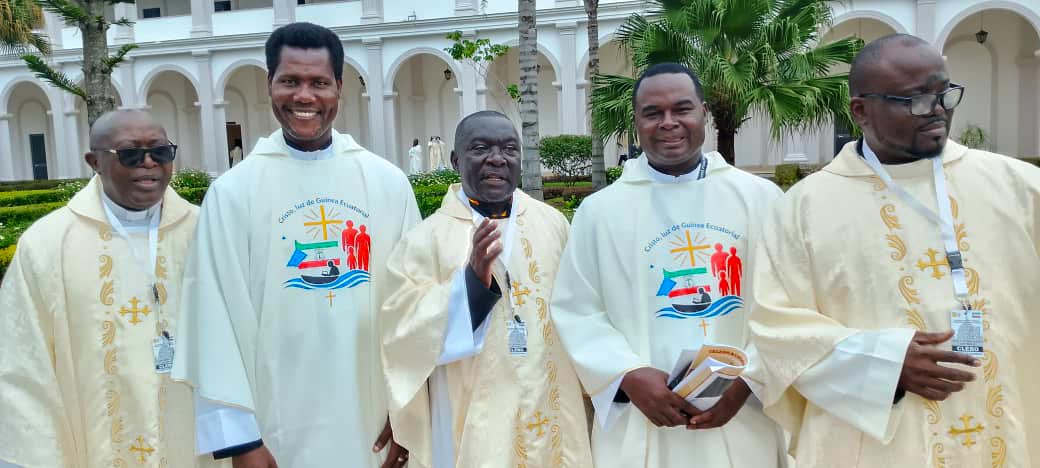
For three unforgettable days, 21–23 April, Equatorial Guinea became a place of celebration, joy, and profound spiritual renewal thanks to the historic pastoral visit of Pope Leo XIV. Forty four years after Saint John Paul II last set foot on this land, the nation once again welcomed the Successor of Peter. Equatorial Guinea was one of the four African countries chosen by the Holy Father for his first pastoral journey to the continent following his election.
The theme of the visit, “Christ, Light of Guinea, towards a future of hope,” beautifully captured both the history and the mission of the Church in Equatorial Guinea, especially as the country marks the 170th anniversary of evangelization.
Malabo – A Call to Build a Nation of Peace
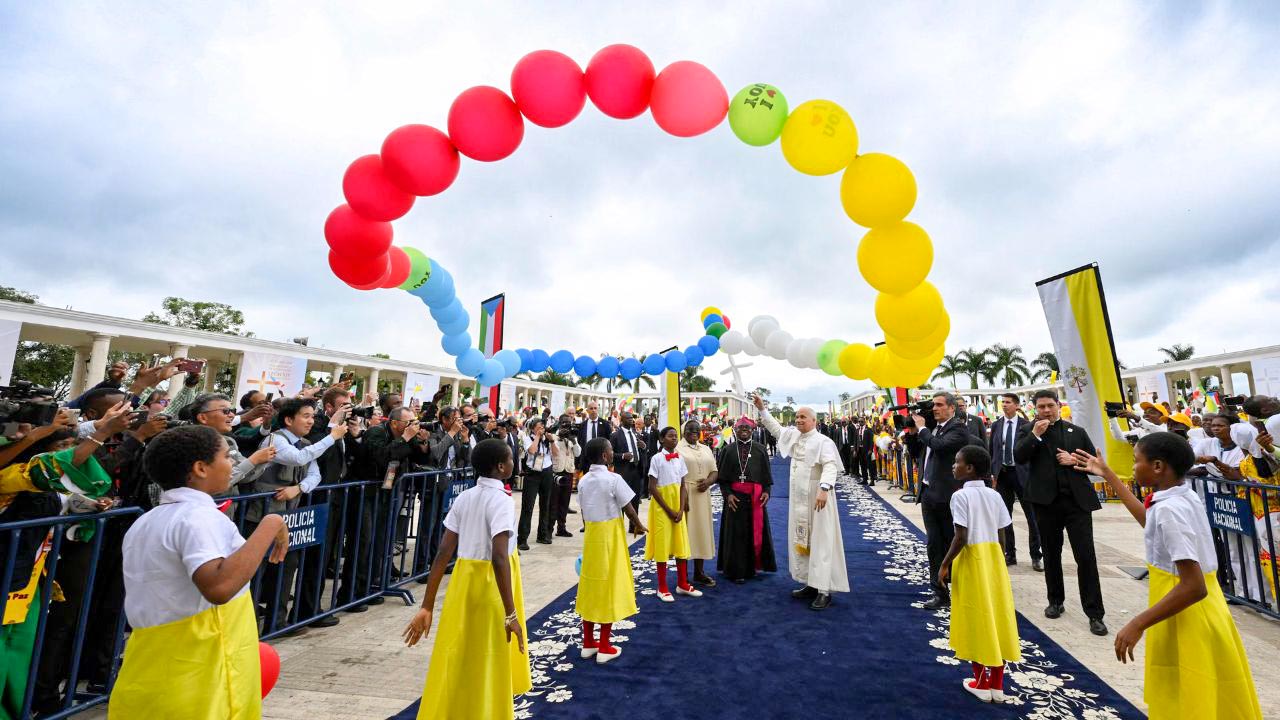
The Pope’s journey unfolded across three cities: Malabo, Mongomo, and Bata. On 21 April, the Holy Father arrived in Malabo, where he was welcomed by the Head of State. He then met with the President and the diplomatic corps. In his address, the Pope invited national leaders to work toward building a “heavenly nation reflected in the earthly city.” Drawing on the thought of St Augustine, he emphasized that the new capital of Equatorial Guinea must become a city of peace—where life, freedom, responsibility, and respect for every human being are safeguarded.
After the meeting with the diplomatic corps, the Pope inaugurated the new university campus “León XIV.” There he met representatives of the cultural and academic world, stressing the essential role of education in building authentic and liberating peace. Using the image of the CEIBA tree, he encouraged the nation to bear “good and sweet fruits” of human and moral values.
Mongomo – Strengthening the Church’s Mission
The second major gathering took place in Mongomo, at the Basilica of the Immaculate Conception. During the Eucharistic celebration, the Holy Father addressed priests, religious men and women, and catechists, encouraging them to persevere in their mission with renewed zeal and fidelity.
After Mass, he inaugurated a new technology centre named “St John Paul II.” The event drew a remarkable number of pilgrims, including many from neighbouring Gabon and Cameroon, highlighting the regional significance of the visit.
Bata – A Message of Mercy, Hope, and Commitment
In the afternoon, the Pope continued his journey to Bata, where he visited the city’s prison. There he met with inmates, offering them words of hope and mercy. “God never tires of forgiving,” he reminded them, urging all to trust in God’s justice and embark on a path of personal renewal.
The day concluded with a vibrant encounter with young people and families. The atmosphere was filled with enthusiasm, as reflected in the speeches of the bishop, the youth, and the families. Young people shared with the Holy Father the realities they face within their families and society. In response, the Pope offered words of encouragement and hope, inviting everyone to embrace Christ, the Light of Guinea, with renewed commitment.
Malabo – A Farewell to Guinea and to Africa
The third and final day of the visit took place once again in Malabo, where the Pope celebrated a concluding Mass, marking the end of his pastoral journey not only to Equatorial Guinea but to Africa as a whole. With gratitude and affection, the Holy Father bid farewell to the nation and to the continent.
The Spiritan Presence
The Congregation of the Holy Spirit joyfully took part in this historic moment through its two communities in Evinayong and Ebibeyin. For us Spiritans, the Pope’s visit was a profound blessing and a renewed call to mission. Truly, “the Lord has been great with us, and we are filled with joy.”
Long live the Pope! Long live Equatorial Guinea! Long live the Spiritans!
This article is also available in: