Word of God: Lk 1:38
“I am the Lord’s servant,” Mary answered. “May your word to me be fulfilled.”
Insight from the Founders
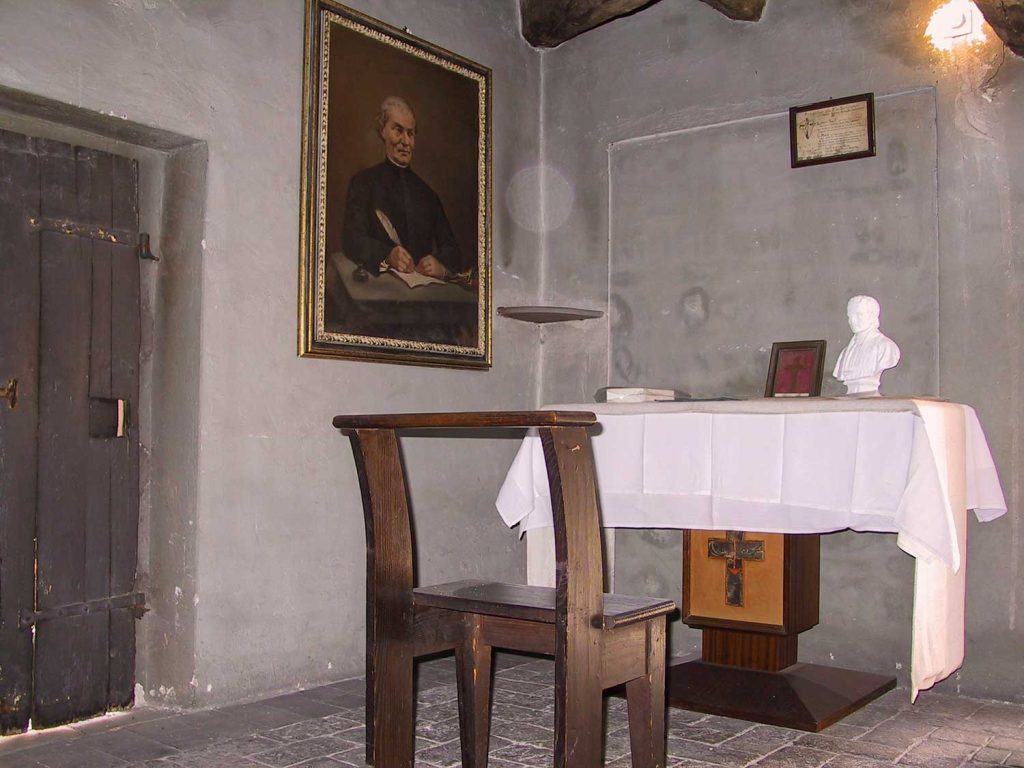
In founding the Seminary of the Holy Spirit, Poullart des Places sought to form men capable of radical availability: ready to go where no one else wished to go, ready to serve where God’s call was most urgent. His own life bears witness to this inner disposition. During the retreat of 1701, he accepted to reorient his life. Shortly afterwards, he welcomed Jean‑Baptiste Faulconnier, discerned his vocation with Grignion de Montfort, left the comfort of his theological college for the poverty of the Rue des Cordiers, and on 27 May 1703 consecrated himself to the Holy Spirit under the protection of the Virgin Mary. In 1704, during his decisive retreat, he once again allowed himself to be guided by the Spirit and by the community.
For Poullart, this was the concrete expression of love — the truest way of responding to God’s call and to the needs of his brothers and sisters.
For Libermann, docility is first and foremost an inner attitude. He writes: “This docility consists of inner openness and profound trust, so that the Spirit may establish the life of Jesus within us” (ND XIII, 144). Libermann’s entire life bears witness to this total openness: accepting trials without rebellion, discerning calls without avoiding them, advancing without relying on human certainties. To his fellow priests, he insists that openness does not mean waiting for guarantees, but standing ready for God: “Do not fall into the fallacy that one must first seek certainty before embracing the uncertain… If we are not entirely devoted to the service of Jesus Christ in his Church, ready to sacrifice everything, there would be no point in us gathering together” (ND VI, 76).
For Libermann, availability means allowing oneself to be led wherever the Spirit opens a path, even when that path remains obscure. It means moving forward in confidence, certain that the Spirit precedes us, accompanies us, and accomplishes what we cannot do on our own.
Reflection
Availability is one of the most consistent features of Spiritan spirituality. It is both openness to God and attentiveness to our brothers and sisters — an inner movement that runs through our history from Poullart des Places to Libermann and remains today at the heart of our vocation.
From the very beginning, Poullart des Places embodied this attitude. This inner movement took concrete form in availability: going wherever God’s call was heard, even to the poorest and most neglected places. The motto of the first Spiritans expresses this attitude perfectly: “Ecce ego, mitte me” — Here I am, send me. Spiritan readiness is this constant “yes” that makes us mobile for mission and attentive to the needs of the community. This movement of openness, inaugurated by Poullart, is the first expression of the Spiritan charism.
For Libermann as well, availability is an attitude of the heart. He describes it as an “inner availability and a very great trust” (ND XIII, 144). His own life is a long apprenticeship in this openness: moving forward without human certainty, embracing trials, discerning calls, allowing himself to be led wherever the Spirit opened a path — the shaking of his Jewish faith in Metz, the revelation of Christ to Stanislas, the painful choice of Jesus over his father, the obstacle of epilepsy, the trials of the Eudist novitiate, the “little light” calling him to work among Black people, the departure for Rome without support, and later the acceptance of the call to the priesthood and the opening of a novitiate in Amiens.
Through his life and writings, he testifies that openness is an act of faith in the unknown. Rather than seeking reassurances, he invites us to advance in faith, even when the path remains obscure. For him, availability means accepting God’s unexpected plans, standing ready for Him, and remaining attentive to the direction in which His Spirit leads — in a trusting openness to what God desires to accomplish.
This availability, nourished by union with God, poverty, and inner detachment, becomes the space where the Spirit can act and the source of our missionary presence. It is accompanied by attentive listening to reality, by a discernment that renounces what no longer bears fruit and welcomes God’s unexpected initiatives. Thus, walking in faith with open hands remains the Spiritan way of allowing ourselves to be preceded and guided by the Spirit.
On this path, Mary remains our model. She teaches us to say “yes” without understanding everything, to move forward in trust, to let the Spirit guide our lives. Understood in this way, openness takes root in a renewed “yes” that gives birth to mission and enables us to go where God awaits us.
Questions for reflection
- In which areas of my life is the Spirit inviting me today to step out of my comfort zone to say a “yes” that is more concrete and more generous?
- How can I today show a simpler, more joyful and more concrete openness towards the people God places in my path?
Prayer
O my God, you who lead all those who truly trust in you toward the heavenly Jerusalem, I place myself entirely in your hands. I surrender myself to your divine Providence; I renounce my own will, that I may follow yours with simplicity and trust. Make known to me what you ask of me, so that I may live on this earth the state of life you have chosen for me. Grant me the graces I need to serve you faithfully and to give glory to your divine Majesty throughout my pilgrimage. Amen.
(Prayer by Poullart des Places quoted by Jean Savoie, Praying for 15 Days with Poullart des Places, p. 34.)
Lead us where you will and make us ardent witnesses for the glory of God and the life of the world. Amen.





This article is also available in: