Development and hope in southern Ethiopia
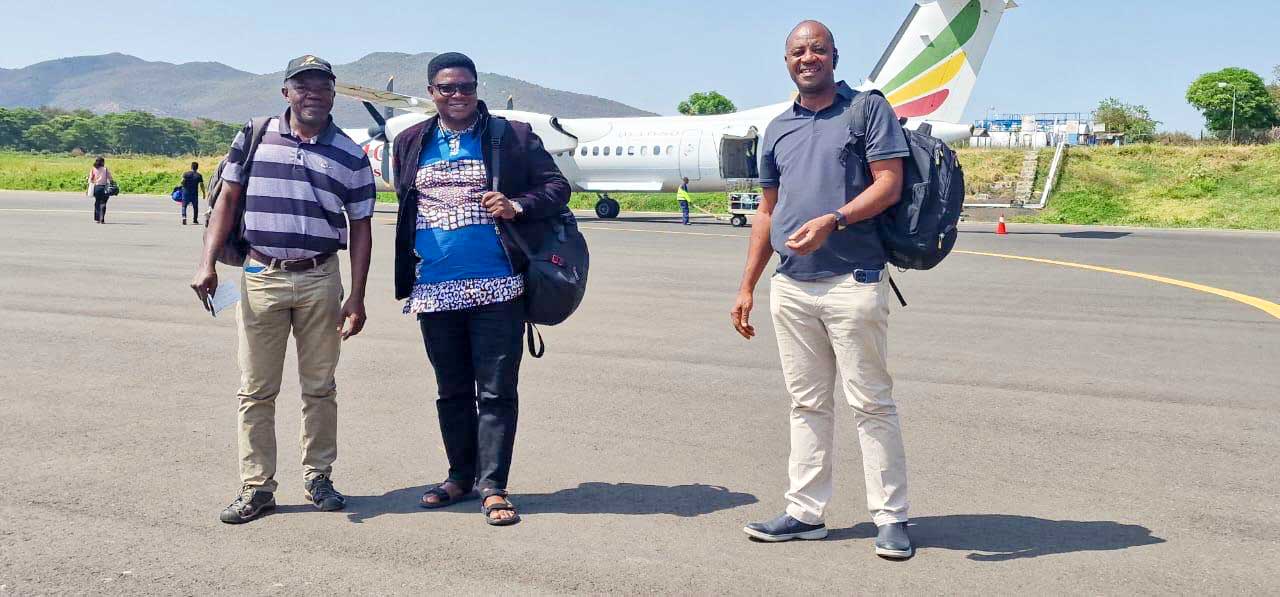
From 1 to 5 September 2026, the development team from the Spiritan Central Development Office travelled through southern Ethiopia to visit communities, missionaries and development initiatives in Yabello, Dhokolle, Dubluk, Dhadim, Dimeka and Arba Minch. The team was led by Fr Kenneth Okoli, CSSp, Director of the Central Development Office, and included Bro Baba Omari, CSSp, Regional Coordinator for Francophone countries, and Fr Joseph Mario Adah, CSSp, Regional Coordinator for Lusophone countries and Latin America.
The journey revealed a mission shaped by vast distances, difficult roads and communities exposed to recurrent drought, water scarcity and limited access to basic services. Yet it also revealed something stronger: local communities determined to build a better future, missionaries committed to remaining close to the people, and development workers combining professional expertise with the values of the Gospel.
Across the region, evangelization and human development are inseparable. Parish ministry is accompanied by schools, boarding hostels, water projects, climate-resilient livelihoods, peacebuilding and the formation of local leaders. These are not isolated interventions. Together, they form a long-term commitment to the dignity of the whole person and to communities becoming protagonists of their own development.
For the Central Development Office, the visit was an opportunity to listen, assess progress and strengthen collaboration. For donors and benefactors, it offers a clear picture of what sustained partnership makes possible in remote communities: children remain in school, families gain safer access to water, pastoralist households become more resilient, and local institutions acquire the capacity to serve for years to come.
Yabello: Education and locally led development
Yabello, the administrative centre of the Borana Zone, shows how pastoral care and development can reinforce one another. Holy Spirit Catholic Parish serves a wide network of outstations spread across extensive pastoral territories. From this base, missionaries coordinate catechesis, youth ministry, sacramental celebrations and accompaniment of communities that may be several hours away.
Education is among the mission’s most important development commitments. Many children from pastoralist families live too far from a school to attend regularly. Others come from households unable to meet the cost of accommodation near an educational center. Separate boarding hostels for boys and girls respond directly to this barrier. They provide a safe environment in which students can study throughout the academic year, while also receiving personal guidance, spiritual formation and encouragement to grow in responsibility.
The value of these hostels extends beyond individual pupils. When a young person completes school, the benefits reach the family and the wider community through improved opportunities, confidence and leadership. Sustaining the hostels, however, requires dependable support for food, educational materials, building maintenance, healthcare and qualified personnel. Continued partnership is essential if vulnerable students are not to lose their place in education because of poverty or distance.
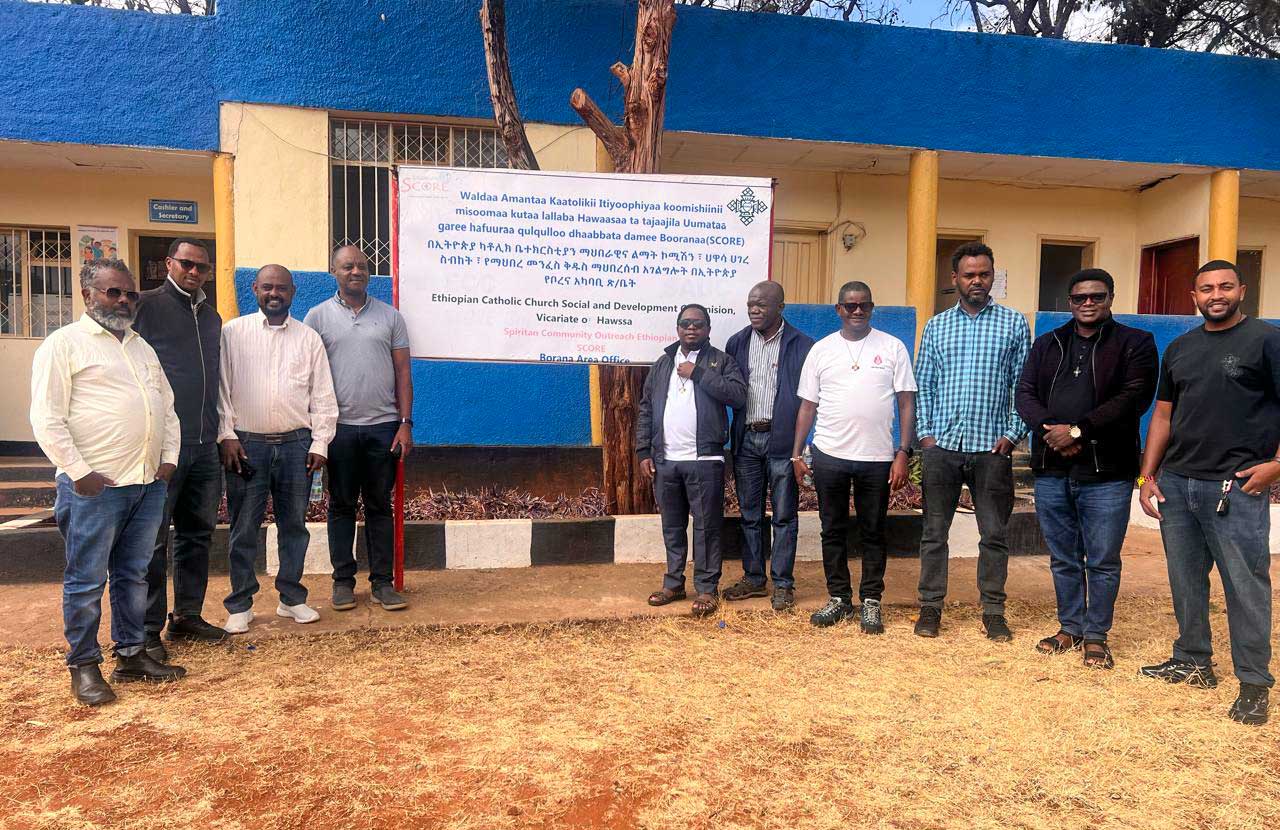
Yabello is also an important center for Spiritan Community Outreach Ethiopia, known as SCORE. Its programs begin with consultation rather than predetermined solutions. Staff work with communities to identify priorities and develop responses in food security, climate adaptation, sustainable livelihoods, peacebuilding, livestock development, natural-resource management and local capacity building.
This approach is especially important in an area where drought and changing weather patterns are placing increasing pressure on pastoralist livelihoods. By combining local knowledge, technical support and community participation, SCORE helps families prepare for future shocks instead of remaining dependent on repeated emergency assistance.
Dhoqqolle and Dubluk: Schools, hostels and water that restores dignity
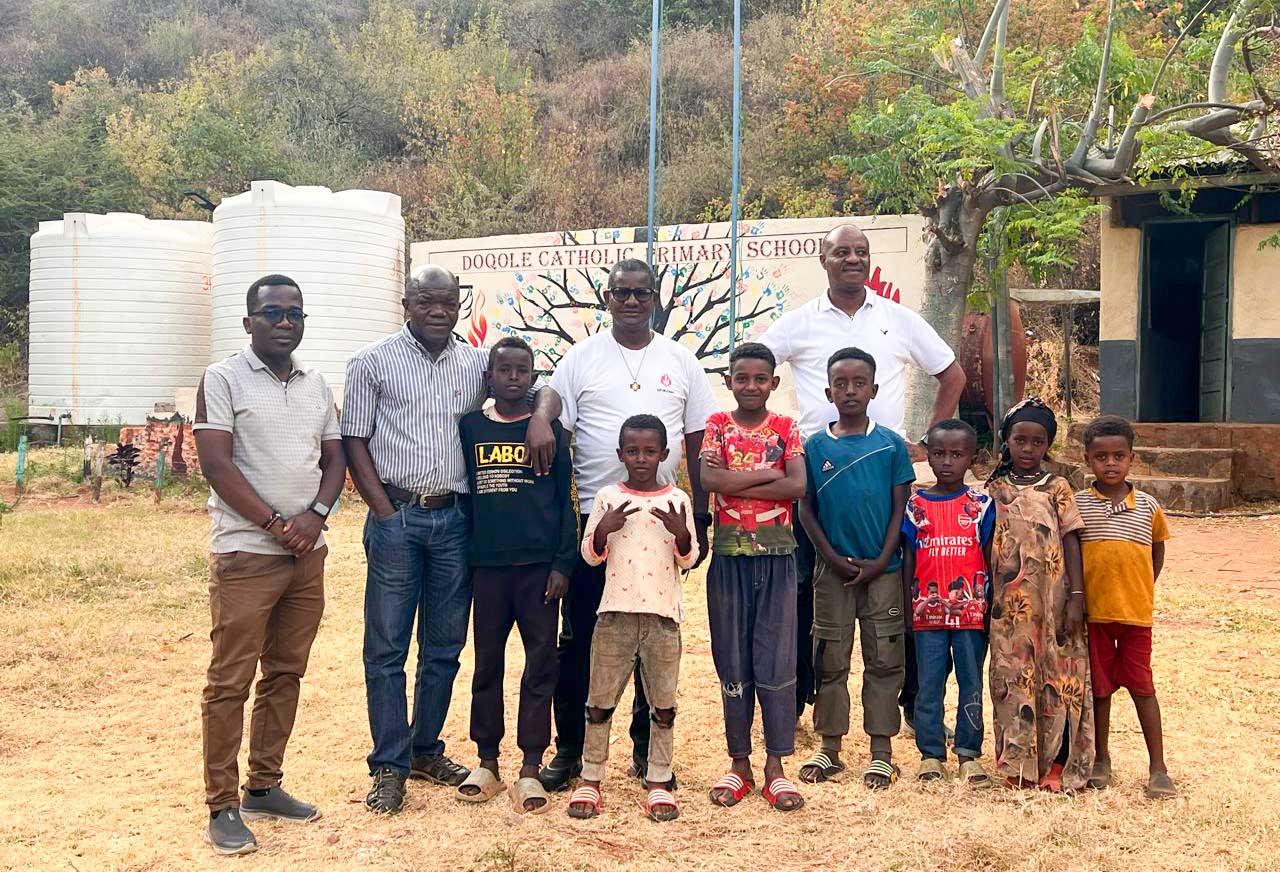
In Dhoqqolle and Dubluk, the team saw the practical sacrifices required to bring education and basic services to dispersed rural communities. Dhoqqolle remains the canonical parish center, while a number of pastoral and administrative activities are coordinated from Dubluk. This flexible arrangement enables the missionaries to respond more effectively to local realities and remain close to the people.
Spiritan primary schools serve children from the two communities and neighboring settlements. For many families, these schools offer the only realistic route into formal education. Separate boarding facilities for boys and girls complement the schools, making regular attendance possible for children whose homes are far away. The hostels provide stability, supervision and a supportive learning environment, but their operation is demanding. Meals, healthcare, learning materials, trained staff and safe buildings all carry costs that local communities cannot meet alone.
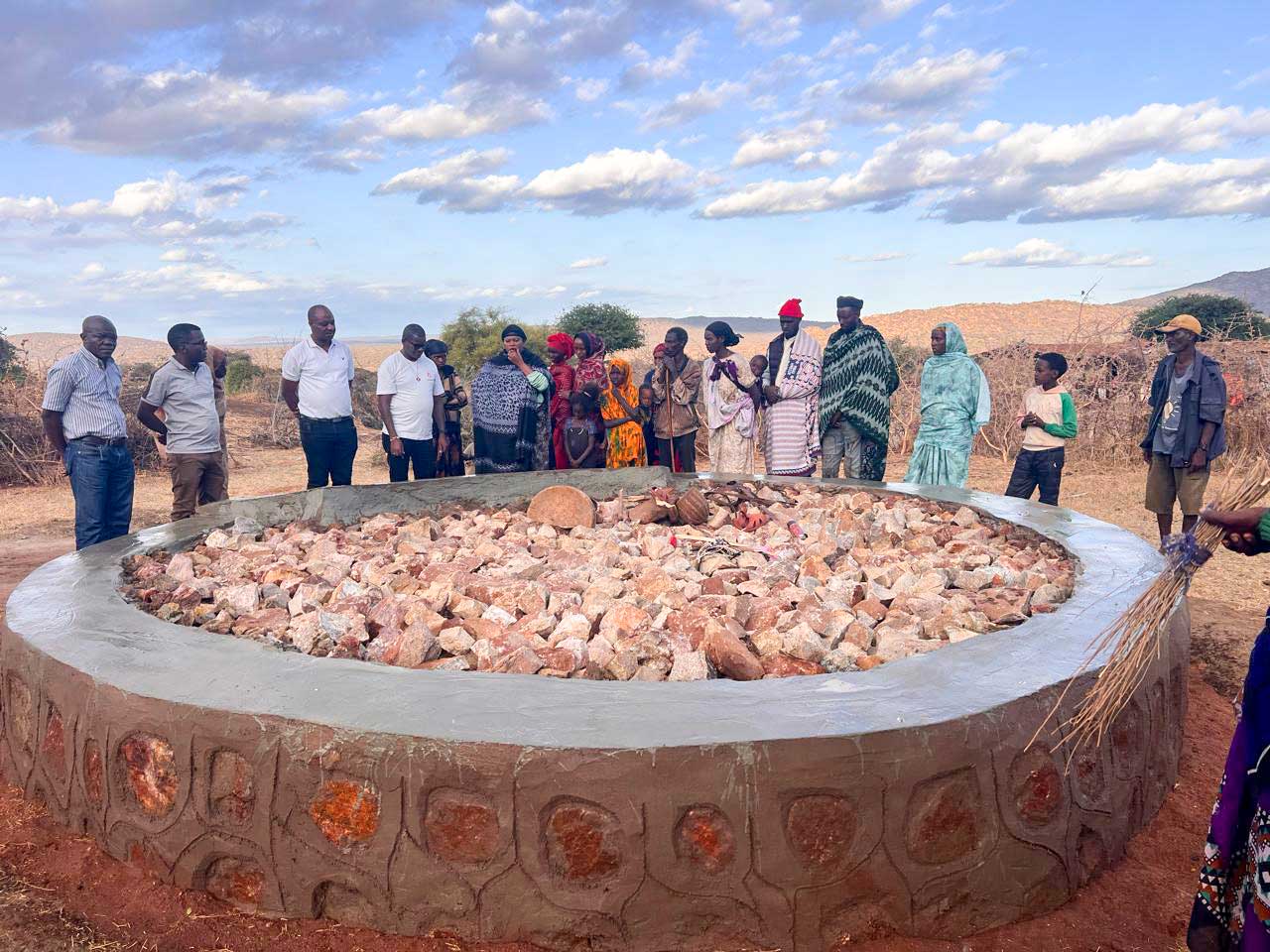
The team also visited work associated with the Together for a Sustainable Future program, supported by Caritas Austria. Access to reliable water is central to this initiative. In pastoralist communities, a functioning water system improves health and sanitation, supports livestock, strengthens household livelihoods and reduces the time spent searching for water. Its impact is particularly significant for women and girls, who often carry the heaviest burden of water collection. Time saved can be redirected to schooling, family responsibilities and income-generating activities.
The project demonstrates why water infrastructure must be accompanied by local participation and planning for maintenance. A water point is most sustainable when communities help identify the need, share responsibility for its care and gain the skills required to manage it. In this way, the investment does more than answer an immediate shortage: it strengthens community ownership and reduces vulnerability to future drought.
Here, donor support becomes visible in everyday life, in a child able to attend class, a mother spared a long journey for water, healthier families and livestock better protected during dry periods.
Dhadim: A missionary legacy that continues to serve
Dhadim holds a special place in the history of the Spiritans in Ethiopia. It is the cradle of the Congregation’s presence in the country, where pioneering missionaries began a work that has grown across several regions and generations. The visit therefore offered both an encounter with history and an opportunity to consider how that inheritance continues to bear fruit.
The early missionaries entered an unfamiliar cultural and linguistic setting and served communities separated by difficult terrain. Their approach was grounded in patient presence: learning local languages, forming catechists, accompanying families and responding to human needs alongside pastoral ministry. Today, that same integrated vision continues through education, pastoral outreach, healthcare-related service and community development.
The delegation prayed at the grave of Fr Ton Leus, CSSp, one of the pioneering Spiritan missionaries in Ethiopia. The moment recalled that present-day programs rest on relationships and trust built over many years. Preserving this legacy is not simply a matter of remembering the past. It helps the Region remain faithful to a way of working that values cultural respect, local leadership and long-term commitment.
That commitment was also evident during a visit to the family of the late Mr Arbale Gollo, a devoted catechist who had collaborated closely with Fr Kenneth Okoli during his nearly eight years of missionary service in Dhoqqolle, his first appointment after ordination. Mr Gollo’s death shortly before the delegation arrived gave the visit particular poignancy.
Catechists are indispensable partners in remote missions. They lead communities when a priest cannot be present, prepare people for the sacraments, accompany families and sustain the daily life of faith. Investment in their formation and support is therefore also an investment in local ownership and continuity. Dhadim reminds us that sustainable mission is built not only through infrastructure, but through people whose knowledge, service and leadership remain rooted in the community.
Dimeka and Arba Minch: Building local capacity for the future
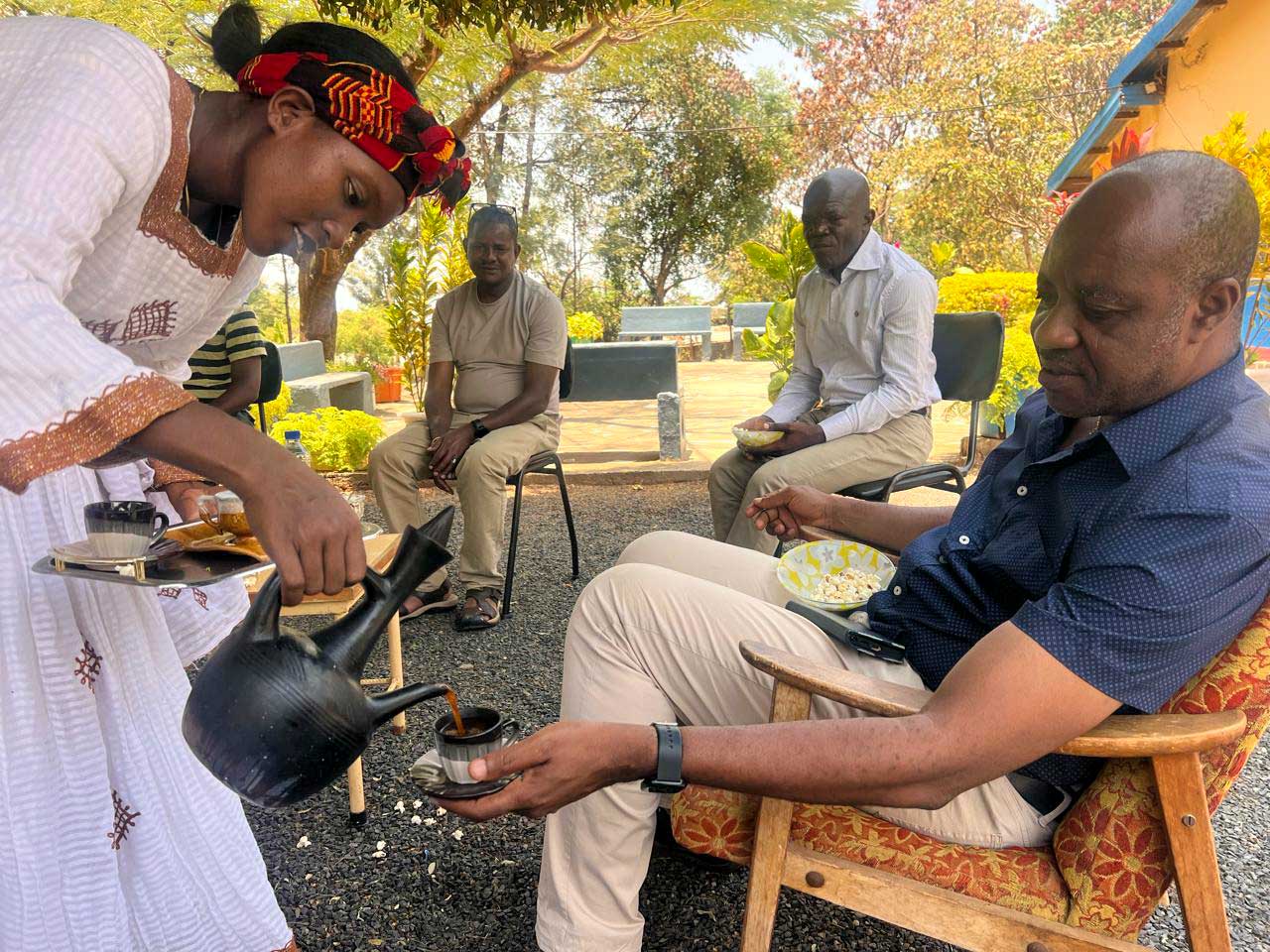
In Dimeka, pastoral ministry, education and hospitality come together in a mission that serves both the local community and the wider Church. Its kindergarten gives young children an early start in a caring environment, nurturing habits of cooperation, responsibility and respect. Early education is a modest but strategic investment: it supports families, prepares children for primary school and lays foundations for lifelong learning. The mission’s guest house also contributes to its sustainability and outreach. It provides accommodation for missionaries, pastoral workers, development partners and visitors travelling through an area where suitable facilities are limited. Beyond hospitality, it creates a meeting place where relationships can grow and collaboration can take shape. With sound management, such facilities can also help strengthen the mission’s capacity to support its ministries.
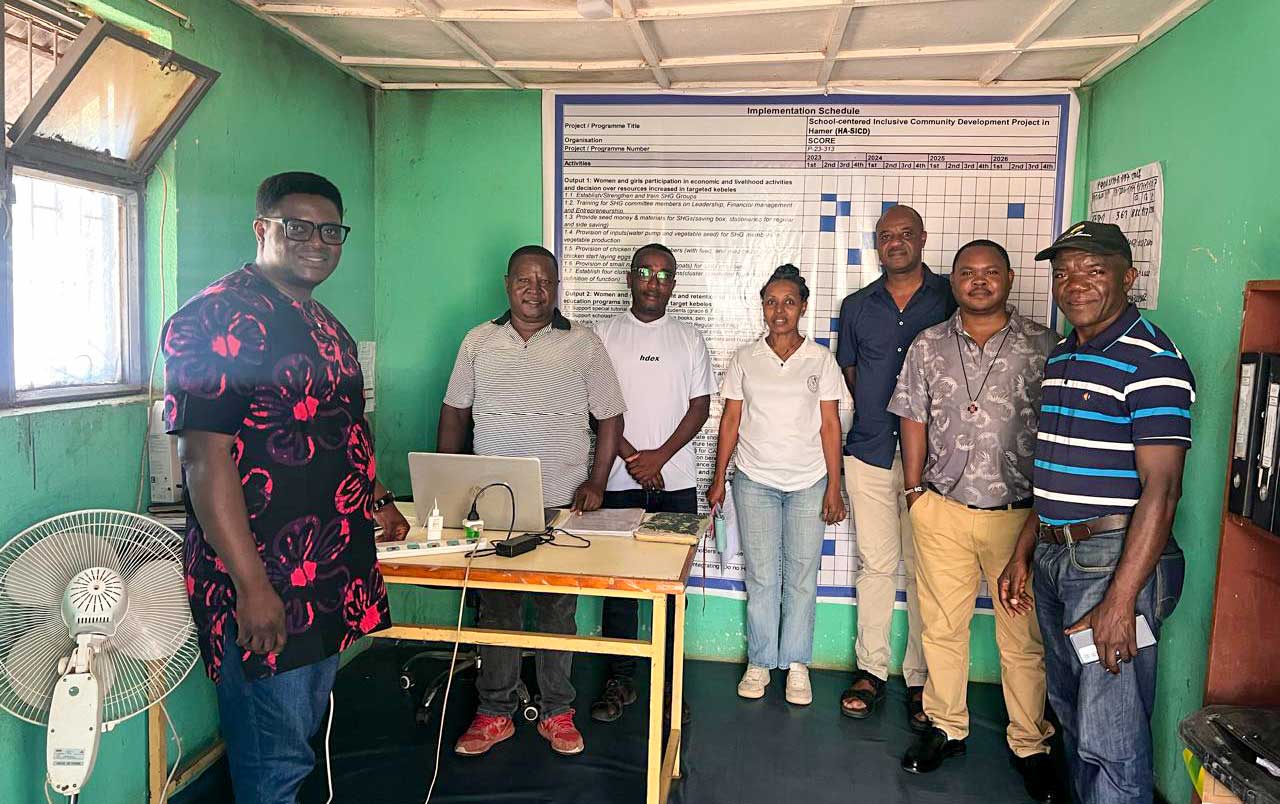
Discussions with SCORE personnel in the area focused on the pressures facing pastoralist communities: recurrent drought, climate variability, environmental degradation and rising operational costs. SCORE responds through sustainable agriculture, food security, environmental conservation, livelihood diversification and capacity building. The aim is not merely to provide relief, but to equip communities with practical options and greater resilience.
Arba Minch, the administrative and formative center of the Ethiopian Spiritan Region, brought the development journey into a longer-term perspective. The Spiritan postulancy prepares young men who are discerning religious and missionary life. Formation is essential to the continuity of every parish, school and development ministry. Investing in future missionaries ensures that the institutions being strengthened today will continue to receive pastoral leadership tomorrow.
Arba Minch also hosts SCORE’s regional offices and facilities that support the coordination of projects across southern Ethiopia. Professional staff, missionaries and local partners are increasingly working within shared plans, reporting structures and development priorities. This institutional capacity matters to donors: it strengthens accountability, improves coordination and makes it possible to monitor initiatives beyond a single funding cycle.
Partnership that sustains hope: An invitation to walk with the mission
The visit confirmed that development in southern Ethiopia is producing meaningful results where it is rooted in local participation and sustained accompaniment. Education is opening pathways for children from remote pastoralist families. Boarding hostels are making regular schooling possible. Water initiatives are improving health, easing the burden on women and girls, and protecting livelihoods. Climate-resilience and livelihood programs are helping communities prepare for recurring shocks. Formation and stronger regional structures are building the human and institutional capacity needed for continuity.
Serious challenges remain. Geographic isolation increases the cost of transport, construction, supervision and service delivery. Drought and climate change continue to threaten food and water security. Schools and hostels need reliable operational support, while water systems require maintenance and community management. Development teams need skilled personnel and adequate resources to accompany projects, measure results and plan responsibly.
These needs also point to clear opportunities for partnership. Support for education can keep vulnerable children in school. Investment in water and climate adaptation can protect entire communities. Assistance for training can strengthen teachers, catechists, development staff and local committees. Support for institutional development can improve accountability and help successful initiatives grow responsibly.
The role of the Central Development Office is to connect these local priorities with the wider Spiritan family and with donors who share a commitment to human dignity. Its task is not only to mobilize resources, but also to promote sound project design, transparent management, monitoring, learning and long-term sustainability. The visit strengthened this collaboration by bringing regional coordinators into direct contact with the people, programs and practical conditions behind project proposals and reports.
The road through Yabello, Dhoqqolle, Dubluk, Dhadim, Dimeka and Arba Minch is long, but it leads to communities rich in courage, faith and initiative. Their progress is made possible when local leadership, missionary commitment and generous partnership come together. To our donors and benefactors, we offer sincere gratitude. Every contribution becomes part of a larger story: children learning, families gaining security, communities protecting their resources and a local Church growing in its ability to serve.
The visit has ended, but the work continues. We invite our partners to continue walking with these communities as they transform hope into lasting development.
Fr Joseph Adah CSSp
(CDO – Regional Coordinator – Lusophones)