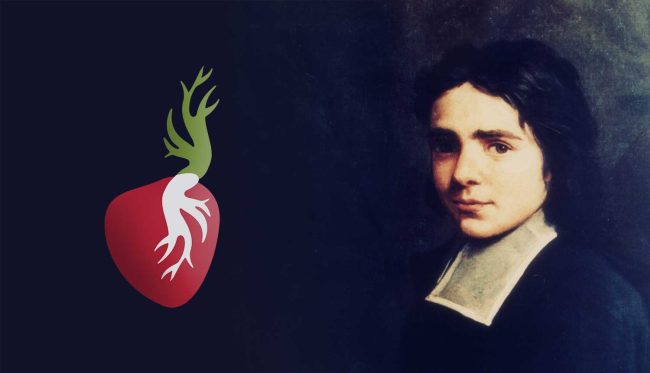
Poullart des Places Novena 2026

This novena invites us to revisit selected passages from Claude François Poullart des Places’ Choix d’un État de Vie as a spiritual pathway for life in an intercultural community. At first glance, the text appears to be a personal narrative—deeply introspective, centred on vocational discernment, and without explicit reference to the encounter between cultures. The very term interculturality did not yet exist in Poullart des Places’ time. And yet, the spiritual experience he describes touches the very core of what makes authentic intercultural community life possible: knowing oneself in order to open oneself more fully to others.

Who has ever invoked Mary in vain!

Next Saturday—the third Saturday after Pentecost, and the day following the Solemnity of the Sacred Heart of Jesus—the Church celebrates the memorial of the Holy Heart of the Blessed Virgin Mary. For us Spiritans, this memorial is far more than a date on the liturgical calendar: it touches the very core of our vocation. And this year it acquires a particularly profound resonance, as we mark the bicentenary of the baptism of François Libermann (1826–2026), that founding moment in which Mary entered his life as a decisive grace.

Day 8 – Waiting for God’s timing

Libermann was imbued with a deep conviction: God acts in life and in events through his Spirit. This discreet yet real presence gives sacred value to even the smallest details of existence. In every situation, he recognized the Holy Spirit as the One who animates, strengthens, directs, and guides, inviting each person to walk with confidence in the path God desires.

Day 7 – The Spiritan life is lived in community

The Spiritan is a man of community—not simply out of practical necessity, but because shared life is the lifeblood that sustains our spiritual and missionary identity. From the beginning, our founders understood that mission cannot be carried out by isolated individuals, but by a body shaped by the Spirit. Community is therefore not merely a setting; it is a theological space, the place where the Gospel takes flesh.

Day 4: Spiritual and material poverty

In the light of our Founders, Spiritan poverty appears as an inner journey in which a person allows themselves to be shaped by God so as to become a source of apostolic life. It involves material detachment, but it is fulfilled above all as a way of standing before God: an attitude that consists in receiving everything from Him, living from Him, acting through Him.

Day 3: Availability

Availability is one of the most consistent features of Spiritan spirituality. It is both openness to God and attentiveness to our brothers and sisters — an inner movement that runs through our history from Poullart des Places to Libermann and remains today at the heart of our vocation.

Day 2 – Docility to the Holy Spirit

Poullart des Places and Libermann each express, in their own way, this same understanding of docility to the Holy Spirit. For Poullart, it is expressed first and foremost as a trusting surrender to the divine breath. From the very beginning, he invited his companions to become hearts open and available to God’s action: to adore the Holy Spirit, to ardently seek the fire of divine love, to imitate the inner openness that allows God to act freely.