Theme: inner freedom opens the door to hospitality
On this first day of the novena, we are invited to enter the journey through an inner movement of self‑emptying. Life in an intercultural community—just like following Jesus—begins with a fundamental renunciation: ceasing to make ourselves, our culture, or our habits the ultimate point of reference.
Today, as we meditate, let us ask for the grace of true inner freedom, the freedom that makes us available to God and open to the brothers and sisters with whom we share our lives. May the Holy Spirit teach us to welcome what unsettles and challenges us—not with fear or withdrawal, but as a path of growth, transformation, and communion.
Word of God — Luke 9:23–24
Then he said to them all: “Whoever wants to be my disciple must deny themselves and take up their cross daily and follow me. For whoever wants to save their life will lose it, but whoever loses their life for me will save it.”
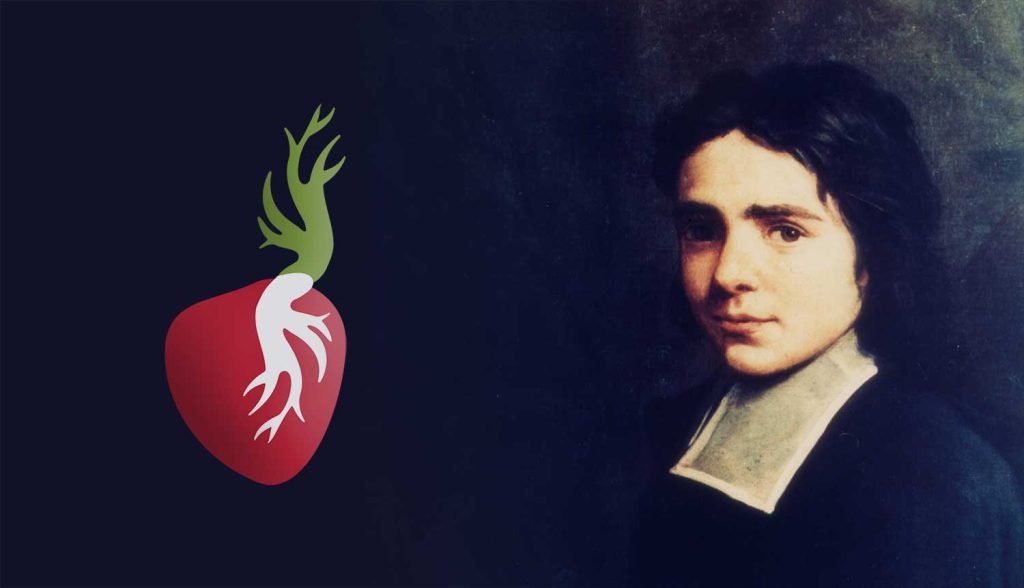
Poullart des Places
“O my God, who leads those who truly entrust themselves to you to the heavenly Jerusalem, I turn to your divine Providence; I abandon myself entirely to it; I renounce my inclinations, my desires and my own will in order to follow yours blindly. Deign to make known to me what you wish me to do, so that, by living here on earth the life you have destined for me, I may serve you, during my pilgrimage, in a state in which I am pleasing to you…”
Intercultural Insight
Self‑effacement is the indispensable foundation for any genuine encounter with the other and for any departure from ethnocentrism.
After his retreat of 1701, Claude Poullart des Places no longer lived turned in on himself or seeking the approval of others. He desired only to do God’s will, and in gratitude to his “Liberator,” he rejoiced in being able to serve Him in the poor, “who are His members.” He did not limit himself to acting on their behalf; he chose to live among them, becoming poor with the poor.
Reflection
To renounce one’s inclinations and one’s own will is not a negation of the self, but an act of faith rooted in trust in divine Providence. In the Ignatian tradition of holy indifference, this renunciation leads to authentic freedom by shifting the self away from the centre of meaning and control.
Such an attitude opens a space for encounter—both human and divine—where identity is received rather than constructed in isolation. This movement of decentering becomes a fundamental principle of true intercultural encounter: relinquishing control over our interpretative frameworks allows us to welcome different worldviews and to be transformed by them.
The “choice of a state of life” thus appears as a stepping outside of oneself, an inner exodus in which identity is discovered in relationship and in the acceptance of otherness.
Prayer
Lord God, you who call us to follow you, teach us to renounce all that imprisons us within ourselves. Free us from the need to be right, from making our culture or our habits the measure of all things. Grant us a heart that is free and open, ready to be moved by your Word and by the presence of our brothers and sisters. May our community become a place where each one learns to step aside to make room for your Spirit. Amen.
This article is also available in: