Theme: Anthropological lucidity
Today we are invited to recognize that every person carries within themselves both goodness and fragility. Life in an intercultural community becomes difficult when we idealize others or refuse to acknowledge their limitations. By accepting our own complexity, we learn to welcome that of others with patience and mercy. Let us ask for the grace of a humble gaze, capable of seeing beyond imperfections and fostering mutual growth.
Word of God — Romans 7:18–19, 22
“For I know that good itself does not dwell in me, that is, in my sinful nature. For I have the desire to do what is good, but I cannot carry it out. For I do not do the good I want to do, but the evil I do not want to do—this I keep on doing. (…) For in my inner being I delight in God’s law.”
Poullart des Places — Recognizing Personal Complexity
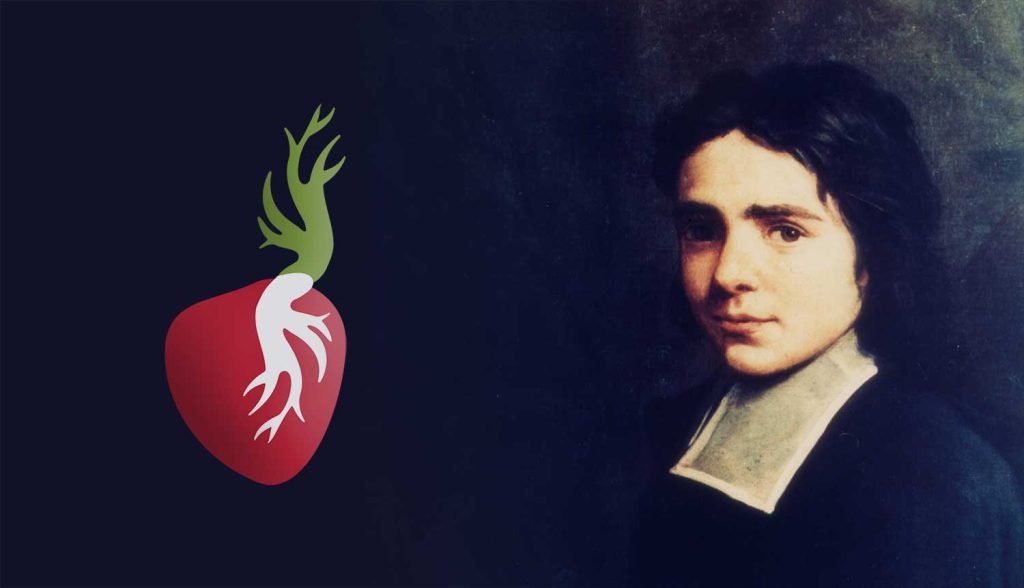
“I must first examine my temperament to see what I am capable of and remember my good and bad passions, lest I forget the former and be caught off guard by the latter. (…) I am somewhat sanguine and very much melancholic (…) seeking independence, yet a slave to grandeur; (…) loving to give alms, and naturally sympathetic to the misery of others; hating slanderers; respectful in churches without being hypocritical. Here I am in my entirety, and when I cast my eyes upon this portrait, I find myself painted from life”
Intercultural Insight
Recognition of human ambivalence, a prerequisite for embracing the complexity of others and of cultures.
Claude Poullart des Places helped destitute students, who, like everyone else, had faults and weaknesses, but he saw in them a wealth of “admirable dispositions” and “talents” that were just waiting to be “cultivated” for the good of the Church and of all.
Reflection: Recognising one’s complexity: a non-idealised anthropology
This detailed self‑portrait reveals a profoundly realistic anthropology, marked by the coexistence of good and evil within the human heart. Theologically, such lucidity is rooted in the doctrine of sin—not as a source of guilt, but as recognition of a wounded condition. The human being is neither angelic nor utterly corrupt: he is a person in tension, capable of both generosity and contradiction. This vision prevents any idealization of oneself or of others. From an intercultural perspective, it invites us to recognize the complexity of our cultural identities, which are themselves marked by contradictions and ambivalences. Life in an intercultural community thus becomes a place of anthropological truth, where God’s call encounters concrete, situated stories shaped by limitations and gifts. It is within this shared reality that each person learns to embrace their own fragility and that of others—without naivety, without harshness, and without judgement.
Prayer
God of mercy, we present to you who we are, with our strengths and our limitations. Teach us to accept our own fragility and that of others with patience and kindness. When difference or weakness troubles us, grant us your compassionate gaze. May our community become a place where everyone can grow without being judged, supported by fraternal love. Amen.





This article is also available in: